Contradanza - dance
Contradanza es el baile de salón cubano más temprano — una evolución cubanizada de la contradanza europea que comenzó a transformarse bajo la influencia rítmica africana a principios del siglo XIX.
Orígenes
La contradanza llegó a Cuba a través de una larga ruta: danza campestre inglesa → contredanse francesa → Caribe (a través de refugiados haitianos que huían de la revolución de 1791) → Cuba. Para las décadas de 1820–1840 era el baile dominante de la clase educada de La Habana.
Formato del Baile
A diferencia de los bailes de pareja que seguirían, la contradanza era un baile de formación grupal:
- Múltiples parejas dispuestas en filas o cuadrados
- Un llamador o líder dirigía las figuras
- Las parejas ejecutaban patrones juntos — cruzándose, girando en círculo, cambiando de pareja
- Similar en formato a las danzas campestres europeas, pero con un carácter rítmico cubano
Este formato grupal lo convertía tanto en un ritual social como en un baile — los participantes se exhibían, establecían contactos y representaban su estatus social.
Lo que lo Hizo Cubano
Incluso en su forma cubana más temprana, la contradanza tenía un sentimiento diferente de su fuente europea. Los músicos cubanos le dieron el ritmo de habanera — un patrón de bajo sincopado que creaba un impulso hacia adelante y sensual ausente en la contradanza europea. Esta fue la primera señal audible de la influencia rítmica africana que entraba en la cultura de salón cubana.
Transición a la Danza
Para las décadas de 1840–1850, el formato de formación grupal estaba cediendo paso a un baile de pareja puro — la Danza. La Contradanza es principalmente de interés histórico hoy en día, preservada en investigaciones musicológicas y actuaciones ocasionales de revivalismo folclórico.
Legado
La Contradanza estableció la tradición de baile de salón en Cuba y plantó la semilla de la transformación rítmica africana que, a lo largo de dos siglos, produciría el danzón, el son, el mambo y la timba.
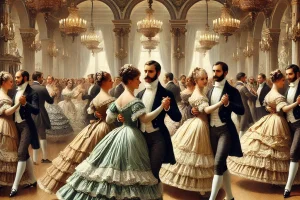
La contradanza fue la primera forma de danza de origen europeo que echó raíces en Cuba y comenzó a transformarse bajo la influencia africana. Es el punto de partida del linaje del baile de salón cubano que eventualmente produciría el danzón, el mambo y el cha-cha-chá.
Lees meer >
La contradanza fue la primera forma de danza de origen europeo que echó raíces en Cuba y comenzó a transformarse bajo la influencia africana. Es el punto de partida del linaje del baile de salón cubano que eventualmente produciría el danzón, el mambo y el cha-cha-chá.
Lees meer >La danza fue el paso evolutivo entre la contradanza y el danzón — un baile de pareja más íntimo y más cubanizado que dominó los salones habaneros en la segunda mitad del siglo XIX.
Lees meer >El danzón fue el primer baile nacional de Cuba — la forma que unificó la identidad de la música popular cubana a finales del siglo XIX y principios del XX, y el antepasado del mambo, el cha-cha-chá y, en última instancia, la timba.
Lees meer > Timba is the music this site is dedicated to exploring. It emerged as a distinct genre in the late 1980s and crystallized in the early 1990s — born in a moment of social crisis, built on the full accumulated history of Cuban music, and still evolving today.
Lees meer >El baile de son es la base de toda la danza popular cubana de pareja — suave, íntimo, arraigado y musical. Cada estilo de baile cubano que siguió ( mambo, casino, timba) se basa en el vocabulario corporal y la estructura establecidos por el son.
Lees meer >Un género de música popular bailable cubana que surgió en los años 1980–90
- Surgió en los años 1980–90
- Influenciado por el songo, la rumba, el funk, el blues, el jazz, el pop, el rock y los ritmos afrocubanos.
- Conocido por sus complejos cambios de ritmo, líneas de bajo agresivas y alta energía que impulsan a los bailadores a improvisar.
Lees meer >The largo, canto, or verse, is where the lead vocalist sings the main lyrical content of the song.
In Timba, the canto often contains a narrative or thematic element and is supported by the rhythm section and background vocals.
Lees meer >Mambo
En la música cubana, especialmente en la salsa y el son,
la sección de "mambo" generalmente se refiere a una pausa instrumental intensa y rítmicamente potente,
que a menudo presenta líneas de metales repetitivas, patrones de call-and-response y energía que va aumentando hacia el clímax de una canción.
El baile de son es la base de toda la danza popular cubana de pareja — suave, íntimo, arraigado y musical. Cada estilo de baile cubano que siguió (mambo, casino, timba) se basa en el vocabulario corporal y la estructura establecidos por el son.
Lees meer > Cuba is the largest island in the Caribbean and the birthplace of some of the world's most influential music and dance traditions. African, Spanish, and French cultural streams collided here over centuries of colonial history, producing an extraordinary creative culture that exported itself across the globe.
Lees meer >