Paulito FG
The "romantic timba"> timba" voice — Paulito FG (Pablo Fernández Gallo) developed a smoother, more melodically sophisticated variant of timba"> timba that emphasized romantic themes and vocal beauty alongside the genre's rhythmic complexity.
About
Paulito FG founded Paulito FG y su Élite in the early 1990s and became known for a style sometimes called " timba"> timba romántica" — timba"> timba's rhythmic sophistication applied to romantic rather than street-level content. His voice is polished and elegant, and his arrangements have a harmonic refinement that distinguishes his band from the rougher energy of NG La Banda or Charanga Habanera.
This romantic approach made him popular with a broader audience and demonstrated the range of what timba"> timba could do. His hit Contigo en la distancia became one of the signature songs of the genre's romantic wing.
A Cuban popular dance music genre that emerged in the 1980s–90s
- emerged in the 1980s–90s
- influenced by songo, rumba, funk, blues, jazz, pop, rock and Afro-Cuban rhythms.
- Known for complex rhythm shifts, aggressive bass lines, and high energy that push dancers to improvise.
Lees meer >Dances
- Danzón – The quintessential Cuban ballroom dance, elegant and formal, often seen as the "national dance of Cuba."
- Danzonete – A sung variant of danzón that became popular in the 1920s–30s.
- Cha-cha-chá – Created in the 1950s by Enrique Jorrín while playing with a charanga; specifically designed for charanga orchestras.
- Pachanga – A playful dance and rhythm from the late 1950s/early 1960s, closely linked to charanga bands.
- Mambo (in its earlier Cuban form) – Before the big-band New York mambo"> mambo, charangas also played early mambo-style danzones.
- Charanga is a Cuban ensemble style and musical tradition that dates back to the early 20th century. It became especially popular in the 1940s–50s and played a crucial role in the evolution of salsa, timba"> timba, and Latin jazz.
Lees meer >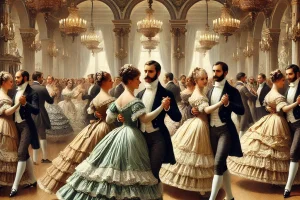
The contradanza was the first European-derived dance form to take root in Cuba and begin transforming under African influence. It is the starting point of the Cuban salon dance lineage that would eventually produce danzón, mambo"> mambo, and cha-cha-chá.
Lees meer >Timba is the music this site is dedicated to exploring. It emerged as a distinct genre in the late 1980s and crystallized in the early 1990s — born in a moment of social crisis, built on the full accumulated history of Cuban music, and still evolving today.
Lees meer >