Danzon - genre
- "Ophicleide or tuba (later replaced by contrabass)"
Primeros conjuntos de danzón (finales del siglo XIX – orquesta típica):
- Maderas: principalmente clarinete (muy característico del estilo), flauta, a veces oboe.
- Metales: corneta o trompeta, trombón.
- Cuerdas: violines, contrabajo.
- Percusión: timbales (o pailas criollas), güiro.
Este tipo de agrupación se conocía como orquesta típica, modelada en parte a partir de las bandas militares europeas pero adaptada a la música cubana de baile.
Desarrollo posterior ( charanga francesa, principios del siglo XX):
- Flauta (generalmente una flauta de madera de cinco llaves, más tarde flautas de plata).
- Violines (2 o más, formando la columna vertebral melódica).
- Piano.
- Contrabajo.
- Güiro (rascador que proporciona el impulso rítmico).
- Timbales (tambores ligeros que reemplazan la percusión europea más pesada).
El danzón fue el primer baile nacional de Cuba — la forma que unificó la identidad de la música popular cubana a finales del siglo XIX y principios del XX, y el antepasado del mambo, el cha-cha-chá y, en última instancia, la timba.
Lees meer >El danzón fue el primer baile nacional de Cuba — la forma que unificó la identidad de la música popular cubana a finales del siglo XIX y principios del XX, y el antepasado del mambo, el cha-cha-chá y, en última instancia, la timba.
Lees meer >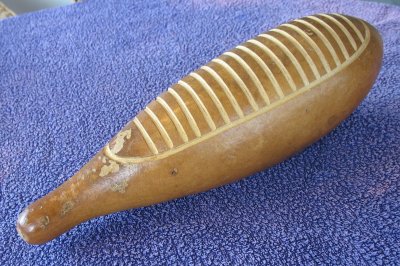
El güiro es una calabaza con muescas que se raspa con un palillo o un tenedor para producir un sonido rasposo y rítmico. Es un elemento habitual de las orquestas de charanga y ocupa un lugar central en el danzón, el cha-cha-chá, el son y la salsa.
Lees meer >Los timbales ( pailas criollas) son un par de tambores poco profundos con casco metálico montados sobre un soporte y tocados con baquetas de madera. Son el motor rítmico de las orquestas de charanga y desempeñan un papel fundamental en la timba.
Lees meer >Los timbales ( pailas criollas) son un par de tambores poco profundos con casco metálico montados sobre un soporte y tocados con baquetas de madera. Son el motor rítmico de las orquestas de charanga y desempeñan un papel fundamental en la timba.
Lees meer >El piano es el corazón armónico y rítmico de la música popular cubana. En la timba, es uno de los instrumentos más exigentes y expresivos del conjunto.
Lees meer >La trompeta ha sido central en la música popular cubana desde los años 20, cuando se convirtió en la voz melódica principal del septeto de son — la "séptima voz" que transformó el conjunto.
Lees meer >