Nube Pasajera ( Agua Mala ) - evolve
A Nube That Never Disappeared
Like a cloud drifting slowly across Havana’s sky, “Nube Pasajera” has never truly vanished — it has only changed shape.
Born in the raw, streetwise sound of Charanga Habanera during the Agua Mala era, the song first appeared as a sharp reflection of fleeting love and urban reality.
Its groove was unapologetic, its message direct, capturing a moment in Cuban music when timba was bold, risky, and deeply tied to everyday life.
Years later, Havana D’Primera revisited “Nube Pasajera” with a different lens.
Where the original felt impulsive and street-driven, the newer interpretation feels reflective and mature.
The melody breathes more space, the arrangements shine with elegance, and the emotion shifts from confrontation to contemplation.
This evolution mirrors the journey of Cuban music itself — honoring its roots while embracing growth.
The cloud passed… but its shadow remained.
From Charanga Habanera to Havana D’Primera, “Nube Pasajera” reminds us that some songs are not moments — they are movements.
Original: Charanga Habanera - "Nube Pasajera" ( Agua Mala )
Havana D'Primera "Nube Pasajera"
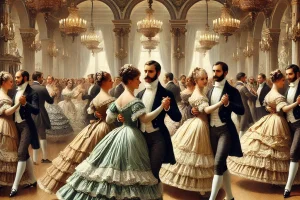
The contradanza was the first European-derived dance form to take root in Cuba and begin transforming under African influence. It is the starting point of the Cuban salon dance lineage that would eventually produce danzón, mambo, and cha-cha-chá.
Lees meer >Rumba is the most African-rooted of all Cuban music and dance forms — born in the streets, courtyards, and docks of Havana and Matanzas in the late 19th century, with no European instruments, no salon setting, and no pretense of European propriety.
Lees meer > Timba is the music this site is dedicated to exploring. It emerged as a distinct genre in the late 1980s and crystallized in the early 1990s — born in a moment of social crisis, built on the full accumulated history of Cuban music, and still evolving today.
Lees meer >A Cuban popular dance music genre that emerged in the 1980s–90s
- emerged in the 1980s–90s
- influenced by songo, rumba, funk, blues, jazz, pop, rock and Afro-Cuban rhythms.
- Known for complex rhythm shifts, aggressive bass lines, and high energy that push dancers to improvise.
Lees meer >