Contradanza
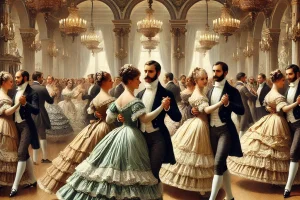
De contradanza was de eerste Europees-afgeleide dansvorm die wortel schoot in Cuba en begon te transformeren onder Afrikaanse invloed. Het is het beginpunt van de Cubaanse salondanslijn die uiteindelijk danzón, mambo en cha-cha-chá zou voortbrengen.
Oorsprong
De contradanza bereikte Cuba via een lange route: Engelse country dance → Franse contredanse → Caraïben via Haïti en Saint-Domingue → Cuba. Toen Haïtiaanse vluchtelingen de revolutie van 1791 ontvluchtten en zich vestigden in oostelijk Cuba, brachten ze de Franse contredanse met zich mee. Van daar verspreidde zij zich westwaarts naar Havana en Matanzas.
Tegen de jaren 1820–1840 was de contradanza de dominante populaire dans van Cuba's ontwikkelde en hogere middenklasse.
Wat haar Cubaans maakte
Zelfs in haar vroegste Cubaanse vorm verschilde de contradanza al van haar Europese bron. Cubaanse muzikanten gaven haar het habanera-ritme — een gesyncopeerd baspatroon (tresillo: lang-kort-kort) dat de muziek haar kenmerkende, licht wiegende gevoel gaf. Dit ritme raakte zo verbonden met Cubaanse muziek dat het de wereld rondreisde: je kunt het habanera-ritme horen in Bizets Carmen, in de vroege tango en in talloze populaire liedjes uit de 19e eeuw.
Dit was Afrikaanse invloed in werking — niet expliciet, niet erkend door de salonklasse, maar aanwezig in de botten van het ritme.
De dans
De contradanza was een salondans — formeel, binnenshuis, uitgevoerd door paren in figuren en opstellingen, vaak met een aanvoerder die de groep door patronen leidde. Het was een sociale activiteit voor Cuba's geletterde klasse: plantage-eigenaren, kooplieden, professionals en hun families.
Ondanks haar formaliteit had zij al een sensuele kwaliteit die haar onderscheidde van haar Europese neven. Cubaans dansen, zelfs in de salon, was meer hip-gedreven en ritmisch betrokken dan Europees balzaaldansen.
Belangrijke componisten
- Manuel Saumell (1817–1870) — de vader van de Cubaanse contradanza als kunstvorm; zijn piano-contradanza's vestigden de compositorische taal van het genre
- Ignacio Cervantes (1847–1905) — verfijnde de vorm verder en overbrugde haar naar de danza en de proto-danzón-wereld
- Miguel Faílde — werkte in de wereld van de contradanza/danza voordat hij in 1879 de eerste danzón componeerde
Erfenis
De contradanza vestigde de tweedelige liedstructuur (een A-deel en een B-deel met een ritmische wisseling), het habanera-ritmische gevoel, en het koppeldansformat dat voortgedragen zou worden door danza, danzón en elke volgende Cubaanse dansvorm. Ze plantte het zaad van de Afrikaanse ritmische transformatie die twee eeuwen later volledig zou bloeien in son en timba.
De contradanza was de eerste Europees-afgeleide dansvorm die wortel schoot in Cuba en begon te transformeren onder Afrikaanse invloed. Het is het beginpunt van de Cubaanse salondanslijn die uiteindelijk danzón, mambo en cha-cha-chá zou voortbrengen.
Lees meer >
De contradanza was de eerste Europees-afgeleide dansvorm die wortel schoot in Cuba en begon te transformeren onder Afrikaanse invloed. Het is het beginpunt van de Cubaanse salondanslijn die uiteindelijk danzón, mambo en cha-cha-chá zou voortbrengen.
Lees meer >De danza was de evolutionaire stap tussen de contradanza en de danzón — een intiemere, meer Cubaans geworden paardans die in de tweede helft van de 19e eeuw de salons van Havana domineerde.
Lees meer >Rumba is de meest Afrikaans-gewortelde van alle Cubaanse muziek- en dansvormen — geboren op de straten, binnenplaatsen en kades van Havana en Matanzas aan het einde van de 19e eeuw, zonder Europese instrumenten, geen salonomgeving en geen schijn van Europese fatsoenlijkheid.
Lees meer >Rumba is de meest Afrikaans-gewortelde van alle Cubaanse muziek- en dansvormen — geboren op de straten, binnenplaatsen en kades van Havana en Matanzas aan het einde van de 19e eeuw, zonder Europese instrumenten, geen salonomgeving en geen schijn van Europese fatsoenlijkheid.
Lees meer >Danzón was de eerste nationale dans van Cuba — de vorm die in de late 19e en vroege 20e eeuw de identiteit van de Cubaanse populaire muziek verenigde, en de voorloper van mambo, cha-cha-chá en uiteindelijk timba.
Lees meer >De cha-cha-chá werd geboren uit een eenvoudige observatie: dansers hadden moeite om mambo te volgen. De bedenker gaf hen een ritme dat ze in hun voeten konden voelen — en het resultaat werd een van de meest gedanste muziekstijlen in de geschiedenis.
Lees meer > Timba is the music this site is dedicated to exploring. It emerged as a distinct genre in the late 1980s and crystallized in the early 1990s — born in a moment of social crisis, built on the full accumulated history of Cuban music, and still evolving today.
Lees meer >De son-dans is de basis van alle Cubaanse populaire partnerdansen — vloeiend, intiem, geaard en muzikaal. Elke Cubaanse dansstijl die volgde ( mambo, casino, timba) bouwt voort op het lichaamsvocabulaire en de structuur die door de son is vastgelegd.
Lees meer >Een Cubaans populair dansmuziekgenre dat ontstond in de jaren 1980–90
- Ontstaan in de jaren 1980–90
- Beïnvloed door songo, rumba, funk, blues, jazz, pop, rock en Afro-Cubaanse ritmes.
- Bekend om complexe ritmewisselingen, agressieve baslijnen en hoge energie die dansers aanzet tot improvisatie.
Lees meer >Mambo
In Cubaanse muziek, met name in salsa en son,
verwijst het "mambo"-gedeelte doorgaans naar een krachtige, ritmisch intense instrumentale break,
die vaak repetitieve hoornlijnen, call-and-response-patronen en opbouwende energie naar het hoogtepunt van een nummer bevat.
De son-dans is de basis van alle Cubaanse populaire partnerdansen — vloeiend, intiem, geaard en muzikaal. Elke Cubaanse dansstijl die volgde (mambo, casino, timba) bouwt voort op het lichaamsvocabulaire en de structuur die door de son is vastgelegd.
Lees meer > Cuba is the largest island in the Caribbean and the birthplace of some of the world's most influential music and dance traditions. African, Spanish, and French cultural streams collided here over centuries of colonial history, producing an extraordinary creative culture that exported itself across the globe.
Lees meer >The following dances have their origin in Matanzas: