Cha-cha-chá - dance
Een Cubaanse dans- en muziekstijl die in het begin van de jaren 1950 werd gecreëerd door Enrique Jorrín, voortgekomen uit de danzón-mambo traditie in charanga-orkesten.
- Oorsprong: Afgeleid van danzón-mambo om toegankelijker te zijn voor dansers.
- Uitgevonden in Havana rond 1953 door Enrique Jorrín.
- Vernoemd naar het geluid van de driedubbele stap van de dansers (cha-cha-chá)
- Uitgevoerd door charanga-ensembles (fluit, violen, piano, bas, güiro, timbales)
- Kenmerkt vereenvoudigde ritmes vergeleken met mambo, waardoor het gemakkelijker is voor sociale dansers
- Werd een internationale ballroomgekte in de jaren 1950
- Combineert Afro-Cubaanse syncoop met Europese elegantie
- Wereldwijde verspreiding: Verwierf snel internationale populariteit.
Rumba is de meest Afrikaans-gewortelde van alle Cubaanse muziek- en dansvormen — geboren op de straten, binnenplaatsen en kades van Havana en Matanzas aan het einde van de 19e eeuw, zonder Europese instrumenten, geen salonomgeving en geen schijn van Europese fatsoenlijkheid.
Lees meer >Mambo
In Cubaanse muziek, met name in salsa en son,
verwijst het "mambo"-gedeelte doorgaans naar een krachtige, ritmisch intense instrumentale break,
die vaak repetitieve hoornlijnen, call-and-response-patronen en opbouwende energie naar het hoogtepunt van een nummer bevat.
De son-dans is de basis van alle Cubaanse populaire partnerdansen — vloeiend, intiem, geaard en muzikaal. Elke Cubaanse dansstijl die volgde (mambo, casino, timba) bouwt voort op het lichaamsvocabulaire en de structuur die door de son is vastgelegd.
Lees meer >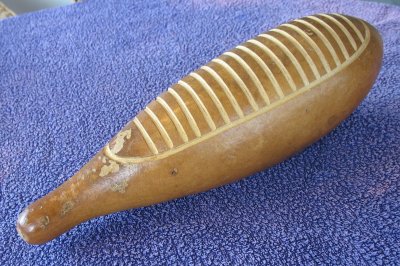
De güiro is een getande kalebas die met een stokje of vork wordt bestreken om een raspend, ritmisch geluid te produceren. Het is een vast onderdeel van charanga-orkesten en staat centraal in danzón, cha-cha-chá, son en salsa.
Lees meer >De timbales ( pailas criollas) zijn een paar ondiepe trommels met metalen behuizing, op een standaard gemonteerd en bespeeld met houten stokken. Ze zijn de ritmische motor van charanga-orkesten en spelen een cruciale rol in timba.
Lees meer >De piano is het harmonisch en ritmisch hart van de Cubaanse populaire muziek. In timba is het een van de meest veeleisende en expressieve instrumenten van het ensemble.
Lees meer >