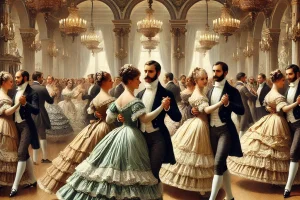
Danza - dance
Danza is de evolutionaire stap tussen contradanza en danzón — Cuba's eerste echte partnerdans, intiemer en Afrikaner van karakter dan de Europese formaties die het verving.
Oorsprong
De Danza ontwikkelde zich in de jaren 1840–1870 toen Cubaanse componisten de contradanza vereenvoudigden tot kortere, intimere stukken die specifiek waren ontworpen voor twee mensen die samen dansten. Het was de dominante salondansvorm in Havana en Matanzas voordat danzón het overnam in 1879.
Dans Karakter
Danza was een aanzienlijke breuk met contradanza:
- Pure partnerdans — geen groepsformaties, geen aankondigster; gewoon twee mensen
- Nauwere omhelzing — meer lichamelijk contact dan contradanza toestond
- Heupbeweging begint — het lichaam begon zich meer volledig te engageren met het gesyncopeerde ritme, heupen bewegend als een natuurlijk gevolg van de muzikale puls
- Sensuele kwaliteit — naar contradanza-normen werd danza als provocerend beschouwd; het verleidde de grens van wat sociaal aanvaardbaar was in de salon
Dit was het habanera-ritme dat zich krachtiger manifesteerde door het lichaam van de danser.
Muzikale verbinding
De danza had twee secties — een inleidende A-sectie en een meer ritmisch actieve B-sectie — die het koppel continu doorheen danste zonder te stoppen. Dit was de voorloper van de meer uitgebreide meersectiestructuur van danzón.
Compositorisch worden de piano-danza's van Ignacio Cervantes als meesterwerken beschouwd — technisch verfijnde stukken die Europese klassieke techniek mengen met Cubaans ritmisch leven.
Vandaag
Net als de contradanza is de danza tegenwoordig voornamelijk van historisch belang — het wordt niet sociaal gedanst. Het verschijnt in musicologisch onderzoek, concertuitvoeringen van Cervantes' pianodanza's en folkloristische culturele contexten. Zijn levende erfenis zit in alles wat daarna kwam: danzón, son en de gehele Cubaanse danslijn.