Timbales - instrument
De timbales ( pailas criollas) zijn een paar ondiepe trommels met metalen behuizing, op een standaard gemonteerd en bespeeld met houten stokken. Ze zijn de ritmische motor van charanga-orkesten en spelen een cruciale rol in timba.
Geschiedenis
De timbales werden geïntroduceerd in de Cubaanse danzón in de late 19e eeuw:
- De vroegste danzón werd gespeeld door orquestas típicas, die zwaardere Europese pauken en militaire percussie gebruikten.
- Rond de jaren 1870–1880 werden deze grote trommels vervangen door de pailas criollas — lichtere, wendbaardere metalen trommels die beter geschikt waren voor Cubaanse dansritmes.
- Deze innovatie hielp de charanga francesa-ensemble (fluit, violen, piano, bas, güiro, timbales) vorm te geven, die de standaard werd voor danzón, danzonete en later cha-cha-chá.
De timbales drongen de Cubaanse muziek binnen via de danzón en werden vervolgens centraal in mambo, salsa, songo en timba.
Constructie
- Twee trommels met metalen behuizing (de ene iets groter/lager dan de andere) op een verstelbare standaard.
- Gewoonlijk vergezeld van een cowbell ( campana) en een woodblock (cáscara-blok) gemonteerd op de standaard.
- Bespeeld met dunne houten stokken.
Belangrijkste patronen
| Patroon |
Beschrijving |
| Cáscara |
Stokpatroon gespeeld op de rand (cáscara) van de trommel — het standaard charanga-groovepatroon |
| Mambo bell |
Een drijvend cowbell-patroon dat de intensiteit opvoert |
| Campana |
Open cowbell — signaleert de hoogte-energieke montuno-sectie |
| Fills & rimshots |
Scherpe accenten die overgangen en hits accentueren |
In timba staat de timbalero centraal bij de gear changes van de band. Hij signaleert en drijft de overgangen tussen secties — van couplet naar pre-coro naar montuno — door middel van cowbell-patronen, cáscara-verschuivingen en krachtige fills. De timbalero bepaalt in feite het energieniveau dat naar de dansers wordt gecommuniceerd.
De campana/cowbell-patroonveranderingen (cáscara → contracampana → campana) vertellen dansers direct hoeveel energie ze moeten gebruiken en wanneer ze mogen losbarsten. Zie de Campana-pagina voor de volledige uitleg.
Bekende spelers
- Tito Puente — "El Rey" van de timbales, de bepalende stem van de Latijns-Amerikaanse bigband
- Amadito Valdés — sleuteltimbalero in de Buena Vista Social Club-opnames
- Giraldo Piloto — Cubaanse drummer die drumstel en timbales samensmolt in songo en timba
Danzón was de eerste nationale dans van Cuba — de vorm die in de late 19e en vroege 20e eeuw de identiteit van de Cubaanse populaire muziek verenigde, en de voorloper van mambo, cha-cha-chá en uiteindelijk timba.
Lees meer >Danzón was de eerste nationale dans van Cuba — de vorm die in de late 19e en vroege 20e eeuw de identiteit van de Cubaanse populaire muziek verenigde, en de voorloper van mambo, cha-cha-chá en uiteindelijk timba.
Lees meer >De cha-cha-chá werd geboren uit een eenvoudige observatie: dansers hadden moeite om mambo te volgen. De bedenker gaf hen een ritme dat ze in hun voeten konden voelen — en het resultaat werd een van de meest gedanste muziekstijlen in de geschiedenis.
Lees meer >Songo is de directe brug tussen traditionele Cubaanse muziek en timba. Ontwikkeld door Los Van Van in het vroege 1970, bedraadde het de Cubaanse populaire muziek opnieuw door funk, rock en jazz te absorberen in de Afro-Cubaanse ritmische basis — en legde alle grondslagen waarop timba zou voortbouwen.
Lees meer > Timba is the music this site is dedicated to exploring. It emerged as a distinct genre in the late 1980s and crystallized in the early 1990s — born in a moment of social crisis, built on the full accumulated history of Cuban music, and still evolving today.
Lees meer >Danzonete is de gezongen evolutie van danzón — de brug tussen de puur instrumentale danzón van de 19e en vroege 20e eeuw en de vocale populaire muziek die zou volgen.
Lees meer >Een Cubaans populair dansmuziekgenre dat ontstond in de jaren 1980–90
- Ontstaan in de jaren 1980–90
- Beïnvloed door songo, rumba, funk, blues, jazz, pop, rock en Afro-Cubaanse ritmes.
- Bekend om complexe ritmewisselingen, agressieve baslijnen en hoge energie die dansers aanzet tot improvisatie.
Lees meer >Montuno
🛎️ 1. Algemene rol van de cowbell
🎹 2. Montuno-sectie
Het montuno is het call-and-response-gedeelte aan het einde van een salsa- of son-nummer, waar alles zich ritmisch opent.
- Het cowbell-patroon wordt vast en aandrijvend, vaak het "salsa bell"-patroon:
(Slagen op 1, de "&" van 2, 4 en de "&" van 4)
- De bongocero wisselt op dit punt van handtrommel naar cowbell.
- De cowbell houdt de maat boven de clave en ondersteunt het montuno-pianopatroon, de bas-tumbao en de hoornriffs.
Dus:
🕐 Cowbell = tijdhouder
🎹 Piano = syncopatie
🎺 Horens/stemmen = call & response
- Letterlijk "mars omlaag" — dit gedeelte is rustiger, vaak vóór de montuno.
- De cowbell wordt hier normaal niet gespeeld.
In plaats daarvan hoor je voornamelijk congas, bongo's en timbales op zachtere instrumenten zoals de cáscara (timbalepatroon op de rand).
- Het ritme is subtieler, waardoor er ruimte is voor zang of melodische inhoud.
Dus:
In marcha abajo rust de cowbell of speelt hij zacht (als überhaupt), en ligt de ritmische nadruk op cáscara of bongó martillo.
- "Mars omhoog" — dit betekent dat de groove intensiveert.
- De cowbell komt sterk naar voren en geeft de hoofdpuls.
- De timbalero speelt gewoonlijk de grote cowbell ( campana), terwijl de bongocero de kleinere bel kan spelen voor contrast.
- Dit gedeelte draait om energie en vaart — het hoogtepunt van de dans.
Dus:
In marcha arriba leidt de cowbell de ritmesectie en sluit aan bij bas en clave om de muziek voorwaarts te stuwen.
🧭 Overzichtstabel
| Sectie |
Cowbell-speler |
Functie |
Typisch patroon |
Energie |
| Marcha abajo |
Normaal stil of licht (cáscara i.p.v.) |
Houdt groove subtiel |
Cáscara op timbales |
Laag–Midden |
| Montuno |
Bongocero (kleine bel) |
Houdt vaste tijdlijn voor montuno |
Salsa bell-patroon |
Midden–Hoog |
| Marcha arriba |
Timbalero (grote bel) |
Drijft ritme, piekenergie |
Salsa bell (luider, zwaarder) |
Hoog |
Wil je dat ik ritmische notatie (in 2–3 en 3–2 clave-uitlijning) toevoeg voor het cowbell-patroon van elke sectie? Dat kan het makkelijker maken om te visualiseren hoe het past binnen de rest van de ritmesectie.
Montuno
De cowbell
🛎️ 1. Algemene rol van de cowbell
🎹 2. Montuno-sectie
Het montuno is het call-and-response-gedeelte aan het einde van een salsa- of son-nummer, waar alles zich ritmisch opent.
- Het cowbell-patroon wordt vast en aandrijvend, vaak het "salsa bell"-patroon:
(Slagen op 1, de "&" van 2, 4 en de "&" van 4)
- De bongocero wisselt op dit punt van handtrommel naar cowbell.
- De cowbell houdt de maat boven de clave en ondersteunt het montuno-pianopatroon, de bas-tumbao en de hoornriffs.
Dus:
🕐 Cowbell = tijdhouder
🎹 Piano = syncopatie
🎺 Horens/stemmen = call & response
🔻 3. Marcha Abajo (ondersectie)
- Letterlijk "mars omlaag" — dit gedeelte is rustiger, vaak vóór de montuno.
- De cowbell wordt hier normaal niet gespeeld.
In plaats daarvan hoor je voornamelijk congas, bongo's en timbales op zachtere instrumenten zoals de cáscara (timbalepatroon op de rand).
- Het ritme is subtieler, waardoor er ruimte is voor zang of melodische inhoud.
Dus:
In marcha abajo rust de cowbell of speelt hij zacht (als überhaupt), en ligt de ritmische nadruk op cáscara of bongó martillo.
🔺 4. Marcha Arriba (bovensectie)
- "Mars omhoog" — dit betekent dat de groove intensiveert.
- De cowbell komt sterk naar voren en geeft de hoofdpuls.
- De timbalero speelt gewoonlijk de grote cowbell (campana), terwijl de bongocero de kleinere bel kan spelen voor contrast.
- Dit gedeelte draait om energie en vaart — het hoogtepunt van de dans.
Dus:
In marcha arriba leidt de cowbell de ritmesectie en sluit aan bij bas en clave om de muziek voorwaarts te stuwen.
🧭 Overzichtstabel
| Sectie |
Cowbell-speler |
Functie |
Typisch patroon |
Energie |
| Marcha abajo |
Normaal stil of licht (cáscara i.p.v.) |
Houdt groove subtiel |
Cáscara op timbales |
Laag–Midden |
| Montuno |
Bongocero (kleine bel) |
Houdt vaste tijdlijn voor montuno |
Salsa bell-patroon |
Midden–Hoog |
| Marcha arriba |
Timbalero (grote bel) |
Drijft ritme, piekenergie |
Salsa bell (luider, zwaarder) |
Hoog |
Wil je dat ik ritmische notatie (in 2–3 en 3–2 clave-uitlijning) toevoeg voor het cowbell-patroon van elke sectie? Dat kan het makkelijker maken om te visualiseren hoe het past binnen de rest van de ritmesectie.
De termen "marcha abajo" en "marcha arriba" beschrijven verschillende energieniveaus of secties binnen de montuno.
Lees meer >The terms "marcha abajo" and "marcha arriba" describe different energy levels or sections within the montuno.
Lees meer >
De clave is een fundamenteel ritmisch patroon en organiserend principe in de Cubaanse muziek. Het dient zowel als muzikaal patroon als als leidend concept, diep geworteld in Afro-Cubaanse tradities.
Lees meer >
De bongo is een paar kleine, open trommels die met vingers en handpalmen worden bespeeld. Het instrument is afkomstig uit het oosten van Cuba en werd een van de bepalende percussiestemmen van son en timba.
Lees meer >
De bongo is een paar kleine, open trommels die met vingers en handpalmen worden bespeeld. Het instrument is afkomstig uit het oosten van Cuba en werd een van de bepalende percussiestemmen van son en timba.
Lees meer >
De bongo is een paar kleine, open trommels die met vingers en handpalmen worden bespeeld. Het instrument is afkomstig uit het oosten van Cuba en werd een van de bepalende percussiestemmen van son en timba.
Lees meer >
Dansen op de Campana (Cowbell)
In Cubaanse timba en songo is de campana (cowbell) niet zomaar een ritme — het is een communicatiesysteem tussen de band en de dansers.
Lees meer >
Dansen op de Campana (Cowbell)
In Cubaanse timba en songo is de campana (cowbell) niet zomaar een ritme — het is een communicatiesysteem tussen de band en de dansers.
Lees meer > De timbales ( pailas criollas) zijn een paar ondiepe trommels met metalen behuizing, op een standaard gemonteerd en bespeeld met houten stokken. Ze zijn de ritmische motor van charanga-orkesten en spelen een cruciale rol in timba.
Lees meer >De piano is het harmonisch en ritmisch hart van de Cubaanse populaire muziek. In timba is het een van de meest veeleisende en expressieve instrumenten van het ensemble.
Lees meer >The largo, canto, or verse, is where the lead vocalist sings the main lyrical content of the song.
In Timba, the canto often contains a narrative or thematic element and is supported by the rhythm section and background vocals.
Lees meer >Mambo
In Cubaanse muziek, met name in salsa en son,
verwijst het "mambo"-gedeelte doorgaans naar een krachtige, ritmisch intense instrumentale break,
die vaak repetitieve hoornlijnen, call-and-response-patronen en opbouwende energie naar het hoogtepunt van een nummer bevat.
De son-dans is de basis van alle Cubaanse populaire partnerdansen — vloeiend, intiem, geaard en muzikaal. Elke Cubaanse dansstijl die volgde (mambo, casino, timba) bouwt voort op het lichaamsvocabulaire en de structuur die door de son is vastgelegd.
Lees meer >Versnellingsveranderingen, of "cambios de marcha," in Timba zijn bijzonder opwindende elementen die bijdragen aan de dynamiek en energie van het genre. Deze veranderingen zijn in wezen verschuivingen in ritme, tempo, of zelfs in de textuur van de muziek die opwinding injecteren en vaak reacties op de dansvloer aanmoedigen. Ze worden strategisch gebruikt gedurende een lied om spanning en ontspanning te creëren, het publiek betrokken te houden, en de veelzijdigheid en creativiteit van de muzikanten te benadrukken.
Lees meer >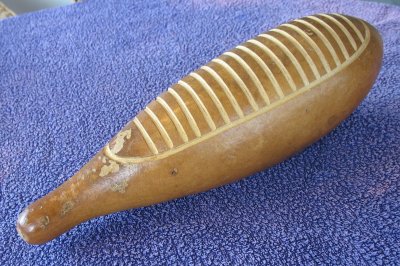
De güiro is een getande kalebas die met een stokje of vork wordt bestreken om een raspend, ritmisch geluid te produceren. Het is een vast onderdeel van charanga-orkesten en staat centraal in danzón, cha-cha-chá, son en salsa.
Lees meer >
Dansen op de Campana (Cowbell)
In Cubaanse timba en songo is de campana (cowbell) niet zomaar een ritme — het is een communicatiesysteem tussen de band en de dansers.
Lees meer >
Dansen op de Campana (Cowbell)
In Cubaanse timba en songo is de campana (cowbell) niet zomaar een ritme — het is een communicatiesysteem tussen de band en de dansers.
Lees meer > De timbales ( pailas criollas) zijn een paar ondiepe trommels met metalen behuizing, op een standaard gemonteerd en bespeeld met houten stokken. Ze zijn de ritmische motor van charanga-orkesten en spelen een cruciale rol in timba.
Lees meer >De piano is het harmonisch en ritmisch hart van de Cubaanse populaire muziek. In timba is het een van de meest veeleisende en expressieve instrumenten van het ensemble.
Lees meer >De piano is het harmonisch en ritmisch hart van de Cubaanse populaire muziek. In timba is het een van de meest veeleisende en expressieve instrumenten van het ensemble.
Lees meer >