Timpani (Keteltrommel) - instrument
De timpani (keteltrommel) speelden een fundamentele rol in de Cubaanse muziekgeschiedenis als de oorspronkelijke toonhoogtetrommel van de 19e-eeuwse orquesta típica — voordat ze werden vervangen door de lichtere timbales.
Historische rol in Cuba
In de tweede helft van de 19e eeuw gebruikten Cuba's formele dansorkesten (orquestas típicas) grote Europese pauken naast blazers en houtblazers om danzón en contradanza te spelen. Dit waren zware, pedaalstembare ketteltrommels die rechtstreeks ontleend waren aan de klassieke Europese orkestbezetting.
Rond de jaren 1870–1880, toen de danzón evolueerde en het charanga francesa-ensemble zich ontwikkelde, vervingen bandleiders de omslachtige pauken door de pailas criollas — kleinere, lichtere metalen trommels die op een standaard konden worden gemonteerd en wendbaarder bespeeld. Deze pailas werden wat we nu timbales noemen.
Waarom het belangrijk is
De overgang van pauken naar timbales is een microkosmos van de Cubaanse muziekgeschiedenis: Europese orkestinstrumenten die werden aangepast, gecreoliseerd en getransformeerd om Afro-Cubaans ritme en dans te dienen. Het timbre veranderde van een dreunende concertzaaltrommel naar een scherpe, snijdende percussiestem die geschikt was voor dansvloeren.
Vandaag de dag
Pauken worden niet gebruikt in de moderne Cubaanse populaire muziek of timba. Hun erfenis leeft indirect voort via de timbales, die dezelfde afstamming dragen — oorspronkelijk een op een standaard gemonteerde, gestemd metalen trommel die in dienst werd gesteld van de Cubaanse dansmuziek.
In klassieke muziekcontexten zijn pauken nog steeds aanwezig in Cubaanse symfonieorkesten en conservatoriumonderwijs.
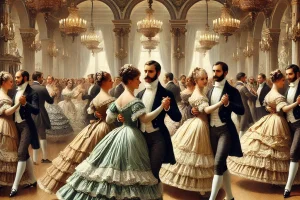
De contradanza was de eerste Europees-afgeleide dansvorm die wortel schoot in Cuba en begon te transformeren onder Afrikaanse invloed. Het is het beginpunt van de Cubaanse salondanslijn die uiteindelijk danzón, mambo en cha-cha-chá zou voortbrengen.
Lees meer >Danzón was de eerste nationale dans van Cuba — de vorm die in de late 19e en vroege 20e eeuw de identiteit van de Cubaanse populaire muziek verenigde, en de voorloper van mambo, cha-cha-chá en uiteindelijk timba.
Lees meer >Danzón was de eerste nationale dans van Cuba — de vorm die in de late 19e en vroege 20e eeuw de identiteit van de Cubaanse populaire muziek verenigde, en de voorloper van mambo, cha-cha-chá en uiteindelijk timba.
Lees meer > Timba is the music this site is dedicated to exploring. It emerged as a distinct genre in the late 1980s and crystallized in the early 1990s — born in a moment of social crisis, built on the full accumulated history of Cuban music, and still evolving today.
Lees meer >Een Cubaans populair dansmuziekgenre dat ontstond in de jaren 1980–90
- Ontstaan in de jaren 1980–90
- Beïnvloed door songo, rumba, funk, blues, jazz, pop, rock en Afro-Cubaanse ritmes.
- Bekend om complexe ritmewisselingen, agressieve baslijnen en hoge energie die dansers aanzet tot improvisatie.
Lees meer >De timbales ( pailas criollas) zijn een paar ondiepe trommels met metalen behuizing, op een standaard gemonteerd en bespeeld met houten stokken. Ze zijn de ritmische motor van charanga-orkesten en spelen een cruciale rol in timba.
Lees meer >De timbales ( pailas criollas) zijn een paar ondiepe trommels met metalen behuizing, op een standaard gemonteerd en bespeeld met houten stokken. Ze zijn de ritmische motor van charanga-orkesten en spelen een cruciale rol in timba.
Lees meer >De timpani (keteltrommel) speelden een fundamentele rol in de Cubaanse muziekgeschiedenis als de oorspronkelijke toonhoogtetrommel van de 19e-eeuwse orquesta típica — voordat ze werden vervangen door de lichtere timbales.
Lees meer > Cuba is the largest island in the Caribbean and the birthplace of some of the world's most influential music and dance traditions. African, Spanish, and French cultural streams collided here over centuries of colonial history, producing an extraordinary creative culture that exported itself across the globe.
Lees meer >