Tumba-francesa
Tumba Francesa and Franco-Haitiano (Franco-Haitian culture/music/dance) are related but not the same thing:
Tumba Francesa is Cuban, created when Haitian migrants (both free people of color and enslaved) brought those traditions to eastern Cuba in the late 18th and early 19th centuries.
- Tumba Francesa is both a dance and a musical tradition.
- Music: At its core, it’s a drumming and singing tradition, led by the premier (master drum), with call-and-response singing.
- Dance: The music is made for dancing, and the dances combine:
- French-derived figures ( contradanza, quadrille, minuets) — upright posture, elegant steps, couples in formations.
- African-rooted movement and rhythm — syncopation, footwork, body isolation, improvisation.
So when people say Tumba Francesa, they usually mean the whole performance practice: drumming, singing, and dancing together, preserved by sociedades de tumba francesa in cuba"> Santiago de Cuba and Guantánamo.
But if you’re classifying it strictly as “dance genres,” then yes — Tumba Francesa is recognized as a Cuban dance, though unlike salsa or son, it is more folkloric and ceremonial than social.
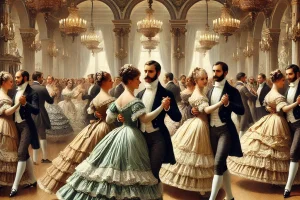
The contradanza was the first European-derived dance form to take root in Cuba and begin transforming under African influence. It is the starting point of the Cuban salon dance lineage that would eventually produce danzón, mambo, and cha-cha-chá.
Lees meer >The Cuban bolero is one of the great romantic song traditions of the world — slow, intimate, and deeply emotional. It is entirely distinct from the Spanish bolero (a fast 3/4 dance) and emerged in Cuba as a vehicle for the island's most heartfelt lyric expression.
Lees meer >Son dance is the foundation of all Cuban popular partner dancing — smooth, intimate, grounded, and musical. Every Cuban dance style that followed ( mambo, casino, timba) builds on the body vocabulary and structure established by son.
Lees meer >The Franco-Haitiano tradition in Cuba reflects the cultural heritage of Haitian migrants, blending African, Haitian, and Cuban influences in music and dance:
Lees meer > Cuba is the largest island in the Caribbean and the birthplace of some of the world's most influential music and dance traditions. African, Spanish, and French cultural streams collided here over centuries of colonial history, producing an extraordinary creative culture that exported itself across the globe.
Lees meer >